


Minor Prophets Study: Haggai Study 7, from Haggai 2:20-23
Nearly 10 years ago, my now-husband got down on one knee and asked me to spend the rest of our lives together. As I answered yes (of course!!!), he slipped a beautiful ring onto my finger, a visible picture of his promise to marry me. In the coming days and weeks, I could hardly stop myself from gazing down at the ring; I wore it with joy and pride, eager to show it off, and excited to answer any questions about it. It was (and is!) beautiful, of course, but more than that, the ring was a sign and a symbol of a promise to me. We were not yet married, and there would be much to do before our wedding only a few short weeks later; but in the midst of all the chaos of life and planning at that point, the ring pointed to our wedding to come. It served as a constant reminder of the next rings we would exchange before God and witnesses, as we promised to live and serve alongside one another “till death do us part.”
Whether it is an engagement ring, a wedding ring, a signed contract, or a downpayment, we all value the security of having a sign or a seal of a promise or agreement to come. It helps us to have purpose, certainty, hope, as we look forward to what is ahead. Throughout the book of Haggai, the LORD had promised His presence with His people; He had promised to use their work of rebuilding the Temple; and He had promised His glorious fulfillment, greater than what any human hands could accomplish. In fact, the Temple itself, even in all of its imperfections, would stand as a sort of symbol and seal of His more glorious purposes to come.
But as we have seen in this short book, these returned exiles have grown discouraged and lost focus time and time again. As the LORD reminds them of His presence time and again, as He calls them to work, and to work wholeheartedly for Him, He assures them that their labor is not in vain. In the midst of their discouragement and fear, He reminds them of His greater promise, and gives them a sign and seal of this promise. As they labor, and even as they finish the work, they can point to His seal and know the LORD is faithful. They will be able to see this seal, and use it to testify to His goodness. As Haggai closes, the LORD leaves them with an incredible sign to give them purpose, certainty, and hope as they wait in longing and expectation for the fulfillment of His promises. And as we come to the end of Haggai, we will see that the LORD does indeed give us a sign and a seal of His promises to us, as we labor and hope and wait upon Him.
Question 1: What will become of the Jews? (Hag 2:21)
Even as they have grown discouraged, the returned exiles have allowed their discouragement to become spiritual laxity. As we saw in Haggai 2:10-19, they have quickly grown weary in the labor of rebuilding, and are hoping that the simple act of doing the labor will be enough for the LORD. They have forgotten that the LORD doesn’t need them to rebuild a Temple in order to accomplish His purposes; but He wants their hearts, and He is graciously allowing them to be a part of His story of redemption. And so, three months after beginning the work of rebuilding, the LORD specifically addresses the priests through Haggai to address the spiritual issue. He reminds them that simple labor without heart engagement is indeed not enough; and He also points them to the fact that He is enough, and He will bless them, even as they are learning once more to tune their hearts upward.
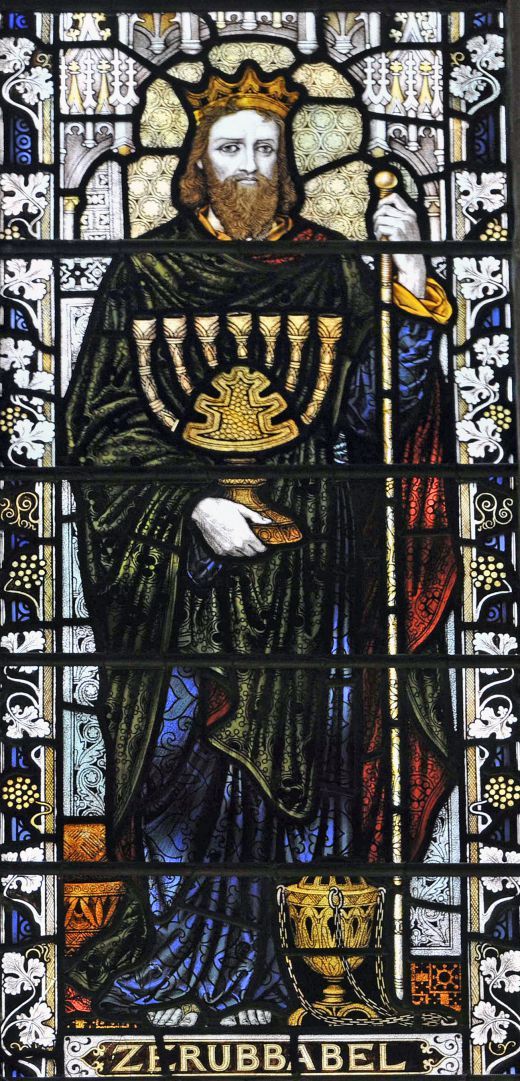
But as Haggai finishes talking to the priests (the spiritual leaders of the people), the LORD has one final address through this prophet, and on the very same day. This time, the LORD signals out one man, instructing Haggai to “Speak to Zerubbabel, governor of Judah” (Hag 2:21). Previously, when addressing Zerubabbel, the LORD had spoken to him alongside Joshua the high priest, and the rest of the people (see Hag 1:1, 2:2,4; & cf. 1:12,14). It had been a message for the leaders, and for all those they were leading in the efforts of rebuilding. Then, the LORD addressed the spiritual issue through the priests. Now, in speaking to Zerubbabel specifically, the LORD is addressing a political question that has been concerning the returnees, and no doubt their governor.
God has worked mightily to allow these 50,000 exiled Jews to return to the ruins of Jerusalem and the ruins of the Temple to begin the work of rebuilding. Yet the reality for the Jewish people at this time was that they were still under Persian rule. History testifies to this, but also the dating of Haggai, which is “in the second year of Darius the king” demonstrates that these returnees were painfully aware of who was in control. Though the LORD was permitting the work on His temple to go forward, politically speaking, the Jews were nothing. 50,000 of them were here now in Jerusalem (and the surroundings), but as a people, they were scattered and dispersed throughout the Persian empire. Zerubbabel was their governor in Jerusalem, but he was not their king; Darius was. Looking around at the destruction of their former lives, their former land, and their former capital city, it was clear that they were truly an unimpressive remnant. Remembering the terrifying power of the Babylonians who had conquered them in 586BC, and now looking around at the new superpower of the Persian empire, it was also clear that there was little hope of autonomy.
So as this little remnant rebuilt the Temple in the midst of ruins, under the leadership of a simple governor, they must have asked themselves: is it worth it? Even if they were able to complete the Temple, what would keep the Persians from destroying it again? Even if the Temple remained, what would become of this little remnant of Jews, the people whom God had called so many centuries ago as a “people for his treasured possession” (Deut 7:6)? How could this Temple indeed see the promises of the LORD fulfilled to “shake all nations so that the treasures of all nations shall come in” (Hag 2:7)? Indeed, Persia would rise and fall, but the Grecco-Macedonians would take over, followed later by the Romans. While there would be puppet kings and rulers in the land of Judea, and although many among the Jews would rise up in revolt, the Jews would not gain their autonomy. So what was the purpose of the Temple? What was the purpose of rebuilding? What would become of the Jews?
Once again, the LORD knows the hearts and questions of His people. He speaks this final time through Haggai on the very same day that He is calling the people to consider their hearts in service. The LORD speaks specifically to Zerubbabel to give him a promise that is for Zerubbabel, but that answers the questions in the hearts of all this remnant, and that assures them that they can indeed stake their hopes and desires upon the LORD their God.
Answer 1: The LORD is Sovereign over ALL nations! (Hag 2:21b-22)
As the remnant is rebuilding, they are wondering how the LORD will shake the nations to bring their treasures to this humble, Jewish Temple. They see the power of the Persian empire, but they have forgotten the power of the LORD their God. So the LORD tells Zerubabbel,
I am about to shake the heavens and the earth, and to overthrow the throne of kingdoms. I am about to destroy the strength of the kingdoms of the nations, and overthrow the chariots and their riders. And the horses and their riders shall go down, every one by the sword of his brother. (Hag 2:21b-22)
Perhaps Judah will never again be powerful and autonomous. But God had established His people originally as a Theocratic Monarchy: that is, a monarchy under the rule and authority of the LORD God Himself. Judah may not have a human king, but they are still under God’s rule. And more importantly, He, as the LORD God and Creator and Sustainer of life, is sovereign over ALL the nations, no matter how powerful they may appear, whether Assyrian, Babylonian, Persian, or any kingdom to come! So if the LORD has purposed to receive glory, He will receive it, regardless of who is on the throne!
As the LORD speaks, He reiterates the promise of Haggai 2:7: He is going to shake the nations, in a way that will both demonstrate His sovereignty, and cause more peoples to bow their knees before Him, and bring their treasures into His Temple. Though this may not happen in Zerubbabel’s lifetime (though indeed, as mentioned earlier, there would be much political upheaval in the centuries to follow), Zerubbabel is no doubt reminded of the Sovereignty of the LORD even as He makes this promise. In language that is intentionally reminiscent of His power over the Egyptians, the LORD promises to “overthrow the chariots and their riders,” and that “the horses and their riders shall go down,” even as He plummeted Pharaoh and his chariots into the depths of the Red Sea. The LORD who was sovereign over His plans and purposes for an enslaved people in Egypt, to bring them out and deliver them for His glory, is the same LORD who is sovereign over this small and seemingly insignificant remnant. Zerubbabel, as leader, and his people need not worry! The LORD is most certainly in control! They can rebuild confidently, because His plans will go forward!
Question 2: What will become of God’s Promise to David? (Hag 2:21,23)
Yes, the LORD is sovereign over the rising and falling of nations; regardless of how insignificant the Jews feel, His plans to use His Temple in their midst to draw the nations to Himself are certain. But another question remains etched on the heart of Zerubbabel, and in the hearts of the returnees. Perhaps they do not need political hegemony for the Temple to accomplish its purpose; but what about God’s promises to King David five centuries earlier? When David had wanted to build a House for the LORD, God’s answer was that this task would fall to David’s son; nevertheless, in an incredible turning of the tables, the LORD had promised rather that He would build a house for David, that “your house and your kingdom shall be made sure forever before me. Your throne shall be established forever” (2 Sam 7:17). This was a covenant conditioned upon the faithfulness of David’s generations to the LORD, with the promise that should they serve Him wholeheartedly, “you shall not lack a man on the throne of Israel” (1 Kings 2:4; & cf. Psalm 89:3-4).
But the problem, as these returned exiles knew all too well, was that the descendants of David (and all of Israel and Judah along with them) had not remained faithful to the LORD, and their lack of faithfulness had eventually brought them into exile. Through the prophet Jeremiah, God had spoken to evil king Jehoiakim, essentially revoking the covenant because of the unrelenting wickedness of Jehoiakim and the majority of his predecessors.1 As a curse, Jehoakim’s son and heir, Jehoachin, would remain childless, such that “none of his offspring shall succeed in sitting on the throne of David and ruling again in Judah” (Jeremiah 22:30, & see context of vv.18ff). So perhaps it was little wonder for these returnees that the Jews had no power!
Though it would seem all hope was lost, the LORD God keeps covenant faithfulness even when His people do not. Even while they were still in exile in Babylon, the LORD had spoken again to Jeremiah, assuring him that He could not and would not break His covenant with David! Rather,
“the days are coming, declares the Lord, when I will fulfill the promise I made to the house of Israel and the house of Judah. In those days and at that time I will cause a righteous Branch to spring up for David, and he shall execute justice and righteousness in the land. In those days Judah will be saved, and Jerusalem will dwell securely. And this is the name by which it will be called: ‘The Lord is our righteousness.’ (Jer 33:14-16)
Indeed, the LORD assured Jeremiah that this would happen because of His covenantal promise to David that “David shall never lack a man to sit on the throne of the house of Israel…” (Jer 33:17). So while the returnees came back to the ruins of Jerusalem to rebuild the Temple, they recalled the sin that had caused the destruction, but also the LORD’s gracious promises of faithfulness to His Covenant. Yet they were still without a king, and without political authority. So how would the LORD bring this about? Even as they were rebuilding the LORD’s house, how would the LORD renew HIS promises to build the lineage of David?
The truth is, while this remnant may have felt that the LORD had forgotten his Covenant when they were unable to make sense of how it would work, the real problem was that their sight was too limited. They were seeing with the limited vision of human eyes; but the LORD would show them, through Zerubbabel, an incredible sign and seal of His Covenant promise: a promise He had indeed not forgotten, nor forsaken, because of His great mercy!
Answer 2: Zerubbabel as God’s Signet Ring (Hag 2:23)
So the LORD continues addressing Zerubbabel, the simple governor of this disheartened remnant, and He again calls him out by name: “On that day, declares the LORD of hosts, I will take you, O Zerubbabel my servant, the son of Shealtiel…” (Hag 2:23a). But here, rather than referring to Zerubbabel as “governor of Judah” as he appears in most of the references to him in Haggai, the LORD calls Zerubbabel “my servant.” Unironically, the LORD had referred to King David as “my servant” (e.g., 2 Sam 7:4, 8; Psalm 89:3, as just some examples).2 Though Jehoachin had indeed remained childless, this Zerubbabel, “son of Shealtiel,” in fact can trace his lineage back to King David.3 By calling him “my servant” and referring to his heritage as the “son of Shealtiel,” the LORD is affirming that His promises to David will indeed go forth through the lineage of Zerubbabel!
Indeed, the LORD closes this address to Zerubbabel (and the book of Haggai) with the promise that He will take Zerubbabel His servant, “and make you like a signet ring, for I have chosen you, declares the LORD of hosts” (Hag 2:23b). Zerubbabel himself is the sign and seal of the LORD’s covenant faithfulness to David, the sign and seal of His redemption for His people that they are witnessing even as He allows them to rebuild the Temple that had been destroyed due to their unfaithfulness. Zerubbabel is the sign and seal, because he is the continuation of the lineage of David, brought back to Jerusalem, and pointing towards the greater fulfillment of the LORD’s redemption, the greater glory of the Temple, the greater purpose of all that God is allowing His people to be a part of as they labor in the work of rebuilding.
Zerubbabel, as the servant of the LORD, not only points backward to David, but points forward to the Servant of the LORD of whom Isaiah had spoken so extensively. Zerubbabel points forward to the perfect, “righteous Branch [who will] spring up for David,” executing justice and righteousness as the perfect King, and the perfect Servant of the LORD. Zerubbabel is the sign and seal of the coming “latter glory of this house [that] shall be greater than the former” (Hag 2:8), the Great High Priest, whose death will tear the curtain of the Temple from top to bottom, as He brings His people face-to-face with the glory and righteousness of the Holy God, through His perfect, sacrificial blood. Zerubbabel is a sign and seal of the coming Messiah Himself. As the LORD promises to shake the nations and reveal His glory throughout the earth, it is this Messiah Himself, coming from Zerubbabel’s line, who will indeed bring peace to His people, as Haggai had spoken of in 2:9.
The work of rebuilding is laborious; the LORD knows this little remnant is quick to lose heart and lose focus. Yet in His constant grace and faithfulness, He sets Zerubbabel as a sign and seal of His purposes and promises in their midst. Zerubbabel is but a humble servant of the LORD, yet as they follow under his leadership, the people can look at his heritage, and see the seal of God’s Covenant promises to David renewed and restored. Zerubbabel serves as a seal, even as they build, that this Temple itself serves as a gracious picture of the LORD’s redemption and restoration of His called out, set-apart people. Build with hope; look forward! The LORD has sealed His Covenant, and He will not relent!
As we come to the conclusion of Haggai, we too are called to work for the building up of the Temple of the LORD – His church! And we, like the returned exiles, are quick to lose focus, quick to become discouraged, quick to give up. But like them, the LORD not only calls us to the work as a part of His redemptive purposes, but He also has given us a sign and seal of the final coming glory of His Temple in the New Heavens and New Earth through the blood of Jesus Christ! Even as He invites us to participate in His redemptive work here on earth, we look at the promise of full redemption, sealed in the finished work of Jesus on the cross. And we can look forward with assurance that His blood is the seal of His promise: that He will return to complete the work! As we read and reflect on Haggai, may the LORD give us a greater understanding of the redemptive beauty of the work to which He has called us, and the glorious promise to which it points! Amen.
Questions for Reflection and Prayer
(Suggested: Either individually, or in a study group, Read through the Scripture passages referenced in this article, and discuss or reflect on what you have read. Reflect on these questions, and then bring your thoughts before the Lord in prayer).
In what areas do you find yourself wondering how God will keep His promises to you? What obstacles make it difficult to see the value of the work to which He has called you? In what areas do you find yourself forgetting His sovereignty or His promises when you feel discouraged in His work? What are practical ways that the LORD gives us to see and remember His presence, His promises, His purposes? What does it look like, practically speaking, to look to the sign and seal of Jesus’ blood, even as we work? How does the seal of God’s promises to us in Jesus give us the courage to continue working? In what areas do you need to be reminded of His redemptive purposes in your work? As you reflect on Haggai as a whole, what does it look like to see your work as a picture of God’s redemption, that helps point others to His glory? How has the LORD challenged you through this study of Haggai? How has He used Haggai to encourage you? What changes are you praying for in your life, work, and attitude, as we finish this study?
References:
- Jehoiakim reigned c.608-598BC, as Pharaoh Neco of Egypt and Nebuchadnezzar of Babylon were vying for control of Judea. Though Jerusalem and the Temple were not destroyed until 586BC, his reign marked the beginning of the end, with Nebuchadnezzar essentially coming and gaining control from the time of Jehoiakim, through the reign of his evil son, Jehoiachin, and finally through the reign of the puppet king Zedekiah, appointed by Nebuchadnezzar himself. See 2 Kings 23:31-24:17 & cf. 2 Chronicles 36:1-16. ↩︎
- Note that there are several places in the Old Testament where the LORD refers to specific leaders who are acting in accordance with His plans and purposes as “my servant.” Examples include Moses (e.g., Num 12:7), Joshua (Josh 1:1), and Isaiah (Isa 20:3). Of note is that each of these “servants” of the LORD were Messianic shadows, pointing towards the role that the Servant of the LORD, Jesus Himself, would accomplish. ↩︎
- On the specifics of the genealogy of Zerubbabel, see Bently, Michael, Haggai & Zechariah: Building for God’s Glory (Leyland: Evangelical Press, 1989), 25. ↩︎
Leave a Reply