


Minor Prophets Study: Haggai Study 1, from Haggai 1:1, & Ezra
How quickly have you ever grown frustrated in a project or goal, even (or perhaps especially) in one for which you may have had great hopes and aspirations? As a self-taught, quite amateur artist, I can think of far too many half-painted canvases I have stuffed into a dusty corner, too frustrated from trying to get a certain line or perspective right to continue in the work. As a writer, there are far too many half-written pages lost in the depths of my computer, too quickly abandoned because the right word or thesis felt slow in coming. In our lives, how quickly do we give up on a goal (e.g., think of the quickly dwindling numbers at the gym throughout the month of January) because the efforts felt too time-consuming or exhausting at the time? Though sometimes we press onward, how quick are we to give up on a friendship, or on pursuing an individual, because the problems seem too big? Or on a spiritual level, how quickly are we to give up on praying for a particular situation, or seeking change, because we feel that the LORD is not answering, or not working quickly enough, or within our expectations? Frustration is a part of the human narrative, and though sometimes we are gifted with stamina to persevere for some time, often we are quick to throw in the towel when something seems just too hard. We are quick to lose sight of the bigger perspective, as the reality of our present circumstances overwhelm our senses.
It is this very problem of losing focus, growing frustrated, and giving up, that has overtaken God’s people as we find them in the little book of Haggai. Though the second-shortest of all the Old Testament books (after the minor prophetic book, Obadiah), this minor prophet brings a strong message to those who have become discouraged with the LORD’s work and calling for them. Though a short series of four proclamations delivered over a few months’ time in 520BC, Haggai speaks loudly not just to his historical context, but to all of us – from then to now – who have perhaps grown weary with feeling the challenges of striving after the LORD. Haggai speaks to us who have lost sight of His greater plans and purposes, calling us to look up, to see His glory, and to once again find joy in moving forward in His plans and purposes.
Yes, as we have seen previously, the LORD spoke through the prophets, and He continues to use them to speak to us. As we will discover through this brief exploration of Haggai over the next few weeks, the LORD, in His grace, will not allow our lack of focus to hamper His plans. Haggai calls us out in our discouragement and frustration, but the prophet also points us to a gracious God who alone can complete HIS great work both in and through us. Through the little book of Haggai, we find courage to work faithfully, even when it feels hard or discouraging, because the LORD promises to not only complete HIS task in and through us, but to bring His glory to bear in ways we could never have fathomed. So as we take the next few weeks to study Haggai, let us come with expectations that just as the prophet was speaking to God’s people then, so the LORD continues to use His Word through this ancient prophet to encourage His people today, and urge us forward to delight in doing His work.
The Historical Setting of Haggai (Hag 1:1)
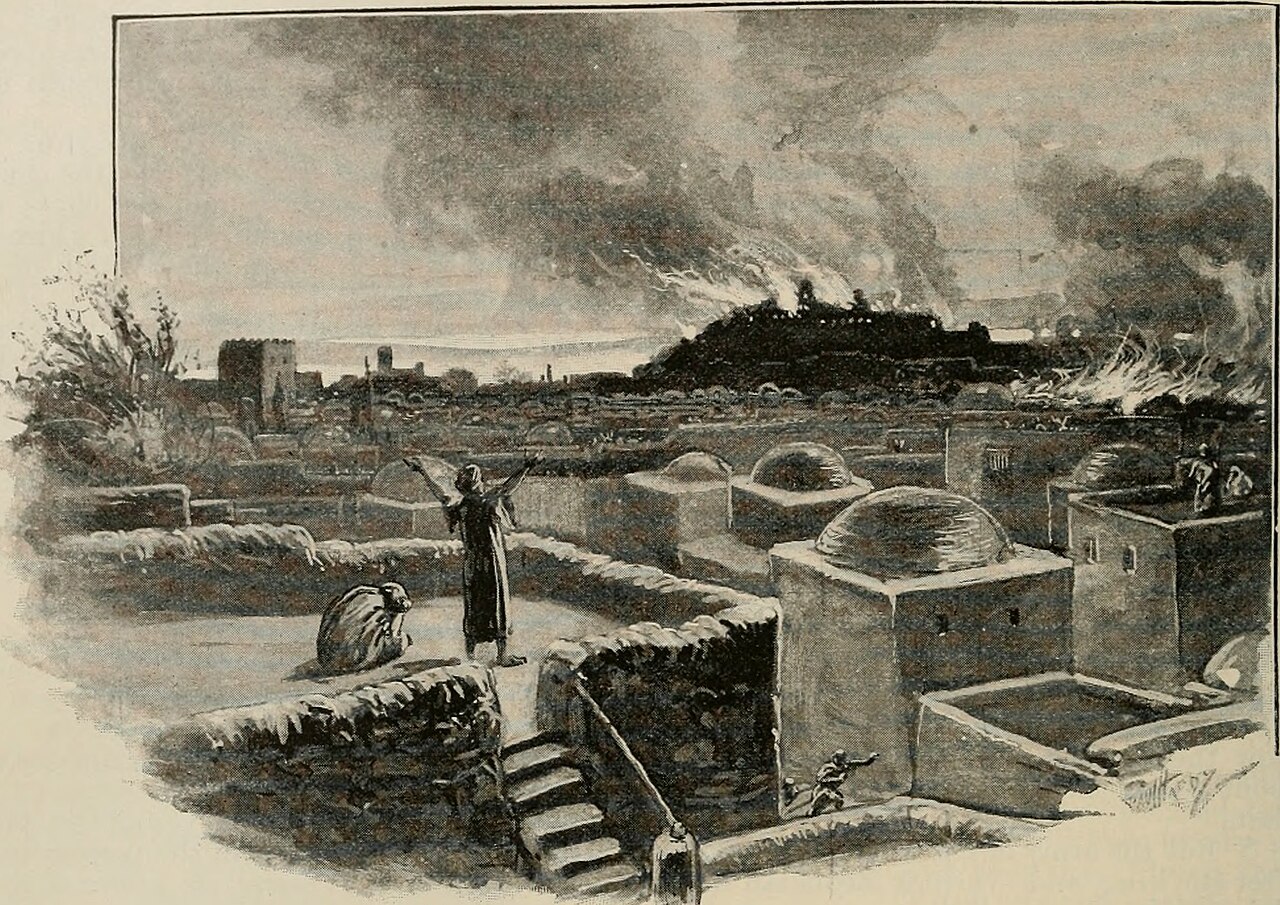
According to the book itself, the Word of the Lord came through Haggai the prophet very specifically “In the second year of Darius the king, in the sixth month, on the first day of the month…” (Hag 1:1), which corresponds with August 29th, 520BC. 1 This date comes nearly a century after the message of Habakkuk, and much has transpired in the history of Judah in those hundred years. Even as the LORD had promised to Habakkuk, judgment had indeed come upon the Southern Kingdom of Judah, who had continued in her wickedness against Yahweh, in spite of all the warnings and cries for repentance. In 597BC, the Babylonians had “surely come” (cf. Hab 2:3), sweeping in, and seeking to conquer. By 586BC, they had succeeded in bringing destruction, conquering the capital of Jerusalem, and carrying most of the Judean population into exile in Babylon. Only the poorest were left to live off of the remaining rubble, and mix with the Edomites from the southwest of Palestine, who took the opportunity to settle in the now-deserted Judea.2
But for as proud and indestructible as Babylon had seemed, even as God had also assured Habakkuk, they too, were unable to stand under their own injustice (cf. Hab 2:6-20). By 539BC, the newest rising superpower, the Persians, had defeated the Babylonians once and for all, under the reign of Cyrus II (Cyrus the Great), thereby expanding the Persian Empire into the largest empire at that point in world history, and transferring control of the Judean (and Israelite) exiles into Persian hands.3
And in His perfect planning, God would use this new superpower as an object for moving forward His Covenant promises for His people. While God’s prophets had warned for centuries of judgment in the form of exile for continued waywardness against the LORD, God’s purpose in bringing such judgment had never been to obliterate His people, or give up on His promises. Rather, as He promised Habakkuk, “the righteous shall live by his faith” (Hab 2:4). Exile was yet another severe mercy to help His people seek Him alone for life, joy, and righteousness. God promised through the prophet Jeremiah that He would use this time of exile to show forth His faithfulness, to purify the hearts of His people. Though He had allowed them to be scattered, the LORD told Jeremiah that He would bring them back to their land, and renew His covenant with them (Jeremiah 32:37-40, and see context of vv.36-44).
Surely, in wrath God would indeed remember mercy (cf. Hab 3:2), and He was using all of this to purify for Himself His chosen, treasured, people for His own possession (cf. Deut 7:6, & I Pet 2:9), even as He used their scattering to bring the fame and glory of His name to more peoples and nations (cf. Hab 2:14).4
Yet as we come to Haggai, not only has Persia taken over the Babylonian empire, but the Lord had indeed directed the hearts of kings (cf. Proverbs 21:1) in order to gather His people back to Judea and to Jerusalem, and to reestablish them there as a people to know and point toward His glory. While Haggai offers a brief introduction, the greater context of the need for his message is found in the book of Ezra. Ezra helps to set the stage to understand the LORD’s work among His people (and among the nations), the call for His people to be at work, the frustration of His Work, and the need for Haggai’s message to return to work! So before exploring the message of Haggai in its full, let us turn today to a quick overview of Ezra to understand the context of what Haggai is addressing.
The Setting of Haggai: The LORD’s Hand at Work (Ezra 1)
Indeed, it is the LORD who directs the hearts of kings and empires, even when we may feel that the enemy has the upperhand. As the most powerful Emperor to-date at that point in the history of the Ancient Near East took his seat on the throne in Babylon, Ezra tells us that “the LORD stirred up the spirit of Cyrus king of Persia, so that he made a proclamation throughout all his kingdom and also put it in writing” (Ezra 1:1b). Though the Babylonians had destroyed Jerusalem – and with it, the Temple, symbolizing the presence of the LORD among His people – the LORD now lays it upon the heart of the powerful, Persian (pagan!) emperor to not only sanction the rebuilding of this temple, but return Judean exiles to do the work, and even to fund the entire process! (See Ezra 1:2-4.) This took place in 538BC, only a year after Cyrus’ conquest of the Babylonian empire.5
Imagine the surprise, encouragement, and elation that ought to have filled the hearts of these exiles as they heard this proclamation. They had spent nearly fifty years of living in exile, learning to seek the LORD in a foreign land, learning in this time of trial and humiliation to find hope and solstice in the LORD alone; learning again to cry out to HIM, to yearn for His promises of redemption, learning to settle down and build houses and work for the good of the city, while learning to trust His work would move forward (cf. Jer 29:1-23).
Now, the LORD was showing forth the remembrance of His promises, allowing them to return to the land that they had forsaken, and more than that, allowing them to rebuild the Temple: symbolically, to rebuild with the LORD at the center, trusting HIS presence (rather than looking for self-satisfaction as they had done so often in Judah) as the focus and priority of life! Just as the LORD had used the Babylonian nation to bring judgement, now He is using the Persian Emperor as an instrument of blessing and redemption for His people. They can return to Judah and Jerusalem to rebuild the Lord’s temple in victory, not because of their own deeds, but because of what the LORD has done, and how HE has been at work in them, and for them. Cyrus’ proclamation is an incredible one!
And so, in response to Cyrus’ decree, many Judean exiles rise up to make the journey back to Jerusalem and begin the work of rebuilding. Ezra records that the number was around 50,000 individuals, including priests, Levites, and laypeople (cf. Ezra 2:64-65), and carrying with them as a gift from Cyrus the “vessels of the house of the LORD” that the Babylonians had carried off in 586BC (Ezra 1:7). Yes, many returned, but strikingly, many did not. They understood that, even if exciting, the journey would be long; Jerusalem would be in ruins; the work that lay before them was great to not only rebuild the Temple, but rebuild lives, resettle, renew and reestablish a former era in a manner that was in accordance with the LORD and His calling on their lives. The LORD’s work was incredible, gracious, and exciting; but it would require vision, dedication, and sacrifice. 50,000 exiles catch the vision and leave to begin.
The Setting of Haggai: The people at Work on the Temple (Ezra 3:8-13)
Moreover, the LORD has changed Habakkuk’s heart such that he need not only sit And as these 50,000 exiles arrive again, 50 years later, in Jerusalem, they are confronted with a shell of a city and the rubble of a temple, that speak not only to the immensity and challenges of the work ahead, but also serve as a grave reminder of the consequences of their turning away from the LORD. Whereas Jerusalem had been a thriving metropolis, they return to set up camp in the ruins of the city and surrounding villages (cf. Ezra 2:70). Whereas the Temple had been the focal point of the city (and all of Judea), they return to offer burnt offerings to the LORD and celebrate His feasts among the rubble (cf. Ezra 3:1-7). It is clear that in spite of Cyrus’ blessing and monetary support, the work will take dedication, focus, and trusting of the LORD to help them bring it to completion.

a map showing Jerusalem as it was prior to exile (prior to 586BC), and as it was upon the exiles’ return in 537BC: far smaller, in ruins, and but a shadow of its former glory. (Picture from the ESV Study Bible by Crossway, p.808)
And yet, besides rubble and ruins, these returned exiles catch a glimpse of something greater: they see God’s mercy, and an opportunity for rebuilding, for reordering their lives, a new chance to teach their children in the ways of the LORD and put the LORD their God at the center of their lives. While the work is daunting, there is great hope, celebrating, and a picture of HIS faithfulness and restoration. And thus, amid the ruins of Jerusalem, “in the second year after their coming to the house of God at Jerusalem” (in 537BC), the exiles begin the work of rebuilding the dwelling place of the LORD, under the direction of “Zerubbabel the son of Shealtiel, governor of Judah” and “Joshua the son of Jozadak the high priest” (Hag 1:1, & cf. Ezra 3:8). This work begins “in the second month,” that is, the Jewish month of Ziv,6 not ironically the same month in which King Solomon had begun work on the original Temple some centuries before (cf. I Kings 6:1). This is indeed a rebuilding, a reestablishment of God’s covenant promise of purifying a people to Himself, and dwelling in their midst. Under the direction of both civil and religious leaders working together, there is great hope in the work, great as it may be, and therefore, great celebration.
Even as they lay the first stones of the foundation, the priests lead the people in singing and worship, recognizing the LORD’s goodness and covenant faithfulness to them throughout the ages, and even through their repeated unfaithfulness. They repeat the words of King David from centuries before, worshiping and singing, “For he is good, for his steadfast love endures forever toward Israel” (Ezra 3:11, and cf. I Chron 16:34). It is most certainly a time for rejoicing and remembering His faithfulness to an undeserving people.
And at the same time, it is a sobering reminder to the elders who had seen the former temple: sin and turning from the LORD is not without consequence. Yes, work on the rebuilding begins, yet the very need to rebuild is a reminder of their turning away. The Temple is being rebuilt, but these elders recognize that in its rebuilding, its glory will not match the glory of Solomon’s original structure. While many rejoice, others raise their voices in lamentation, such that “the people could not distinguish the sound of joyful shout from the sound of the people’s weeping, for the people shouted with a great shout, and the sound was heard far away” (Ezra 3:13).
Worship and praise for HIS grace mixed with lament over sin and its consequences: it is a sobering, yet appropriate picture. The question is: what will drive the continued work of rebuilding: will they find joy in the lament at the overwhelming goodness of God’s mercy in bringing them back and allowing them to reestablish their lives? Or will they become lost in the “what could have been” and forget to see the grace of how the LORD will use even their sinful acts to show forth His glory among them? Even before Haggai comes on the scene, we find an answer quickly in the narrative of Ezra.
The Setting of Haggai: Frustration in the Work (Ezra 4:1-5)
Hardly have the people begun the work on the temple rebuilding, when opposition arises. Recall that these Jewish exiles returned to a city in ruins, but to a land where other peoples had settled during the exile. While these non-Jewish residents (whom Ezra names as “adversaries of Judah and Benjamin,” Ezra 4:1) promised their fealty to Yahweh and asked to be included in the work of rebuilding, the Jewish leaders would not hear of it.7 When they dismiss the offer of help, these disgruntled transplants take it upon themselves to retaliate by becoming a thorn in the side of the Jews. According to Ezra “the people of the land discouraged the people of Judah and made them afraid to build and bribed counselors against them to frustrate their purpose, all the days of Cyrus king of Persia, even until the reign of Darius of Persia” (Ezra 4:4-5). The work which had begun with joy and lamentation, in sorrow over past failure and in expectation of what the LORD would do, quickly comes to a screeching halt… for seventeen long years!
Perhaps it is easy to understand the plight of these returned exiles. After decades of living in exile under Babylonian rule (and for many of these men and women who had been born in exile, it was the only life they knew), returning to Judea meant a complete change of life. It meant giving up homes, leaving family and friends, coming to a place where they could expect to find not just ruins, but also hostility. It meant, like they realized when laying the foundations of the Temple, recognizing not just the joy of the work set before them, but a scarring reminder of what their sin had cost: destruction of the life they had once held dear. Perhaps it is easy to relate with how quickly they are to become frustrated with the work, particularly in the face of opposition. Was it indeed worth it to come all this way, in order to attempt to rebuild a Temple among ruins, while facing taunting and opposition from all sides, and living among the rubble themselves? How easy it is to grow frustrated in following the voice of the LORD when it feels that not only is it not easy, but that opposition is arising on all sides!
And yet, what happens so often with us when we grow frustrated, discouraged, or weary in following His ways, is exactly what we see happening to the returnees. They have lost sight of the mighty, miraculous work of the LORD on their behalf. In seeing enemies attempting to frustrate the work, they have forgotten that it was the LORD Himself who placed it into the heart of the most powerful Emperor known to the world at that time, to send them back to do this work, with his funding and his blessing! How quickly they had lost sight of the LORD’s promises to them to restore them to their land, to give them a new heart, and renew His covenant with them. How quickly they had forgotten the symbolic work to which He was calling them: to rebuild the symbol of HIS very presence among them, the symbol of HIS unending, steadfast love for them! And in losing sight of the big picture, how quickly they had forgotten to cry out to HIM to continue to fortify their hands, and move the work forward, in spite of and even through the opposition! Surely, if the LORD could move the heart of Cyrus the Great himself, He also could navigate through the opposition to the work.
Nevertheless, the people become discouraged. They lose hope, and they lose focus. After laying a few foundational stones among the rubble, they leave the work to again fall apart for nearly two decades. They may have forgotten, they may feel discouraged and hopeless, but the LORD has not forgotten. Once again, He will not allow His plans to be thwarted. He WILL dwell among His people as He has promised.
The Setting of Haggai: Haggai’s message regarding the work (Ezra 4:24-5:2, Haggai 2:1)
And so it is at this point, after seventeen years of temple rebuilding thrust aside, that we find the direct connection between the book of Ezra, and the message of Haggai, where we find the context in which God raises this new prophet to speak His truth to His people. In “the second year of the reign of Darius” (that is, 520BC), the LORD sends “the prophets, Haggai and Zechariah the son of Iddo” to prophesy “to the Jews who were in Judah and Jerusalem, in the name of the God of Israel who was over them,” to call them out in their discouragement, and to animate them to return again to the LORD’s work of rebuilding His Temple (Ezra 4:24-5:1). Through Haggai (and his contemporary and fellow minor prophet, Zephaniah), the LORD will speak His Word to His people, encouraging them, reprimanding them, and pointing them back to His promises.
Through these prophets, the LORD will ensure that His Temple is completed, that His work among His people goes forward, that His glory is made known, among His people, and among the nations! Where His people are quick to feel defeated, discouraged, and inward, God will use Haggai to call their attention, to spur them onward, and to offer a solution to their lamentation and forgetfulness that is far greater than a new Temple structure. As we will see in Haggai, that the Temple is not to the standards of the original Solomonic structure is not a concern to the LORD: rather, He will use this to point towards the ultimate fulfillment of His glory and His ever-presence among His people in Jesus Christ.
In losing sight of His great deeds, in losing sight of His presence and His promises, the LORD sends Haggai because He has not and will not lose sight of His people nor His covenant promises to be faithful to them. As we work through the book of Haggai in the coming few weeks, let us consider where we are quick to lose sight of His promises and His presence, where we are quick to grow discouraged in following His calling in the face of opposition. And through Haggai, may the LORD help us to grow in enjoyment of serving Him, as we see the glory of His work and purposes that far surpasses what we ourselves are able to accomplish or even imagine! Amen.
Questions for reflection & prayer:
(Suggested: Either individually, or in a study group, Read through the Scripture passages referenced in this article, and discuss or reflect on what you have read. Reflect on these questions, and then bring your thoughts before the Lord in prayer).
In what areas of life have you felt frustrated or become discouraged in seeking the LORD’s work or following His direction in your life? What particularly has caused you to become frustrated? What have you done with your frustration and discouragement? In what specific ways have you been tempted to give up, or have you given up in seeking after the LORD, or pursuing His ways? How do you think we lose sight of the LORD’s greater plan in our lives? Are there places where you have gotten lost in lament? What has kept you from moving forward? What do you think it may look like to lament, but move forward in the Lord’s plans? What are some of the ways God speaks to us today, like He spoke through Haggai, to encourage us when we lose sight? What are your expectations in a study of Haggai? What are some ways you would like to pray for the LORD to use this study in your life?
References:
- Given the historical data and evidence, there is almost no debate concerning this date, clearly placed through the timeline of the Persian Kings, as well as the dating of the Jewish calendar. See Bentley, Michael, Haggai & Zechariah: Building for God’s Glory (N.P, Evangelical Press, 1989), 11, 21; and VanGemeren, Willem A., and Willem VanGemeren, Interpreting the Prophetic Word: An Introduction to the Prophetic Literature of the Old Testament (N.p.: Zondervan: 1996), 187). ↩︎
- Currid, John D., and David P. Barrett, The ESV Bible Atlas (Wheaton: Crossway, 2010), 173-174. ↩︎
- Currid and Barrett, ESV Bible Atlas, 179-180. ↩︎
- While outside the scope of this little study, consider how God used this scattering of His people to increase His Kingdom: e.g., Daniel and his friends testifying to the goodness of the LORD in the city of Babylon, in the empire, and later in the Persian empire, causing even Nebuchadnezzar to confess the name of the LORD! ↩︎
- Currid & Barrett, ESV Bible Atlas, 179-180. ↩︎
- See the ESV Study Bible notes on Ezra 3:8 (Wheaton: Crossway, 2008), 807. ↩︎
- Most commentators agree that the leaders were right in limiting the work to only the returned exiles, citing these “adversaries” as practicing a false religion. It seems, however, that there may be room for understanding an alternate interpretation: following II Kings 17:24-33, when Assyria had settled foreigners in the land of Israel after exiling the Northern Kingdom, in a fascinating display of His glory, the LORD had sent lions among the people because they did not serve him. For this reason, the king of Assyria had sent back Jewish priests to instruct the people in the ways of the LORD God of Israel, and it seems that many had converted. Still, II Kings informs us that these “converts” were still essentially polytheistic, purporting to serve the LORD, yet continuing in many of their pagan practices as well (not unlike what the Jewish people had done which had led them into exile). The question is, when it comes to the time of Ezra and the rebuilding of the temple, were there any true converts among these people who could and should have been included in the work of rebuilding? The use of the word “adversary” deserves further study; yet, we might at least consider whether the leaders were too quick to dismiss the offer of help, negating any true desire to serve the Lord some of these individuals may have had, and too quickly classifying them as non-Jews and therefore adversaries, thereby helping to frustrate the work more quickly. ↩︎
Leave a Reply